
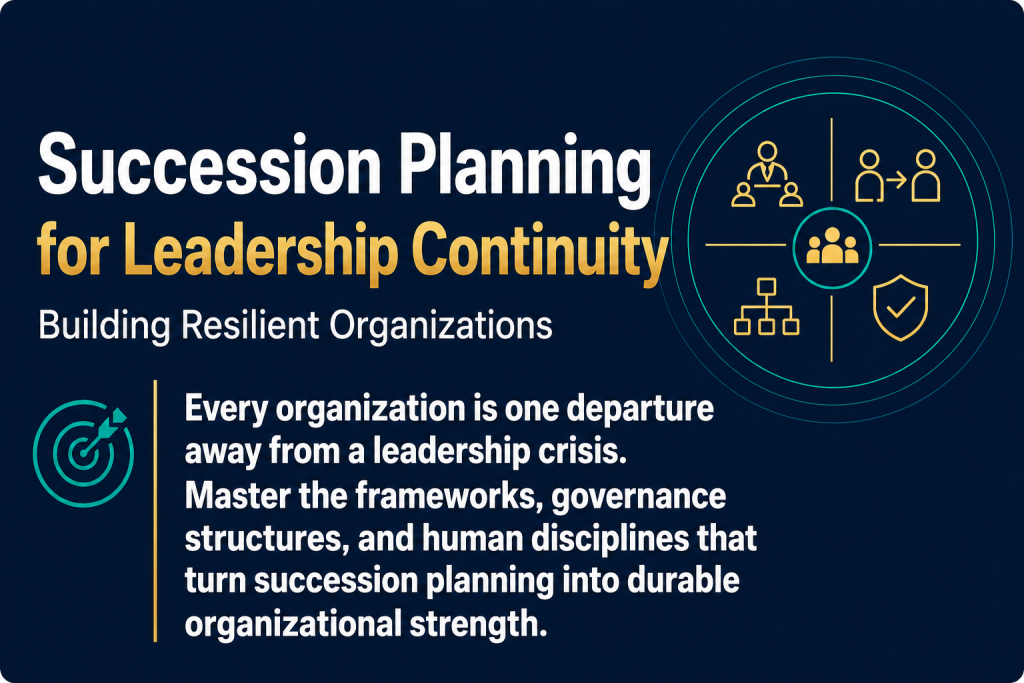
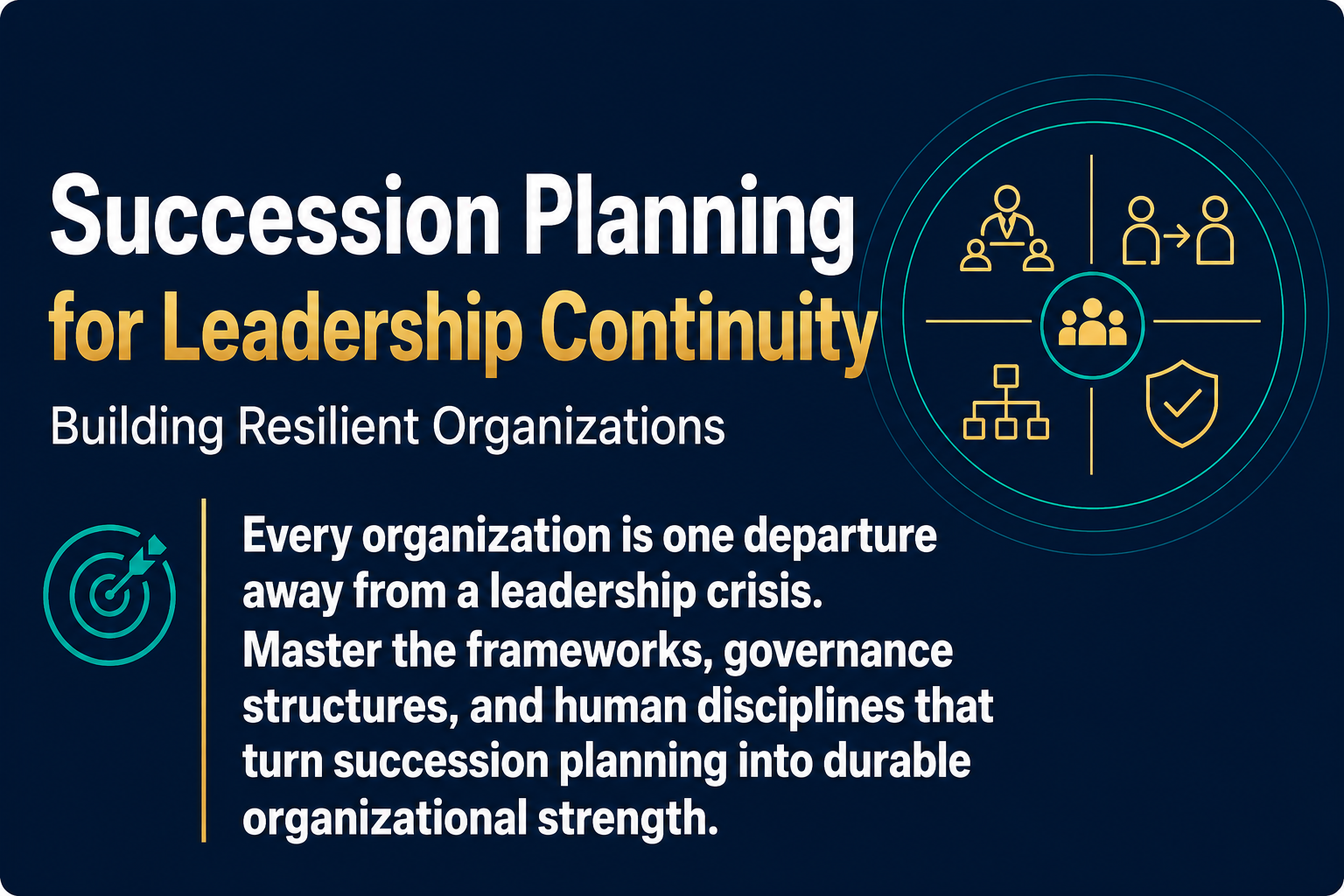
What would happen if your organization’s key leader stepped away tomorrow? For founder-led businesses, family-owned companies, and any organization where leadership is concentrated in a few individuals, succession planning is one of the most consequential responsibilities a leadership team can undertake — and one of the most frequently avoided. This course is designed for company owners, presidents, and senior leaders who are ready to address that challenge directly. Through practical frameworks, honest assessments, and strategic tools, you’ll learn how to reduce key-person dependency, evaluate ownership transition paths, develop your leadership bench, and navigate the emotional and relational complexities that make succession so difficult to get right. By the end, you’ll be equipped to build an organization that is resilient, transferable, and capable of thriving across generations of leadership.
What You’ll Learn
Course Modules
Diagnosing and Reducing Key-Person Dependency
Begin by understanding exactly where your organization is vulnerable. Identify the specific forms of key-person dependency — in relationships, knowledge, decision authority, and operational capability — and develop a prioritized approach to reducing the dependencies that pose the greatest risk to organizational continuity.
Navigating Ownership Transition Paths
Understand the full range of options available when the time comes to transfer ownership. Examine trade-offs in valuation, control, legacy, and continuity across outright sales, family transfers, management buyouts, ESOPs, and hybrid structures.
Building and Sustaining Leadership Bench Strength
Assess your current leadership team against the roles and capabilities your organization will need in the future. Identify high-potential leaders using consistent criteria, design individualized development plans, and maintain multiple successor candidates for every critical role.
Developing Successors and Managing Leadership Transition
Understand succession development as a multi-year process. Transfer real responsibility progressively, manage the incumbent-successor dynamic with clarity and care, and avoid the common failure modes that derail otherwise well-designed succession plans.
Reducing Owner Dependency for Organizational Independence
Address the unique challenge facing every founder-led business: dependence on a single individual’s relationships, knowledge, and daily judgment. Systematically transfer owner-held relationships to institutional ownership and build management capability that operates without daily owner direction.
Designing Governance and Ownership Structures for Succession
Build the governance infrastructure that makes succession possible and sustainable. Design boards and advisory bodies for your organization’s stage, establish shareholder and operating agreements that support succession, and clarify decision authority across owners, board, and management.
Addressing the Emotional and Relational Dimensions of Succession
Confront the human realities that make succession so difficult even when strategic frameworks are in place. Explore the emotional journey owners face, the identity challenges successors navigate, the dynamics family involvement introduces, and build the communication practices that address these dimensions with honesty and care.
Learn how to interpret benchmark data, identify performance gaps, and use comparative insight to support better business decisions.
Modules
7
Duration
3.5 hours
Who This Course Is For
This course is built for company owners, presidents, founders, and senior leadership team members who are responsible for the long-term health and continuity of their organization. It is particularly valuable for founder-led businesses, owner-operated companies, and family enterprises where leadership concentration creates meaningful continuity risk.